

(Source: Marks & Spencer)
As a natural-born cynic (you couldn’t tell?), I had reservations—big reservations—when we first heard of the new trove of weight-reduction drugs like Ozempic, Wegovy et al. After all, history informs us that miracle drugs approved for weight control haven’t always worked out well.
It’s now five years since the FDA approved Wegovy as an injectable obesity treatment and, as far as I can tell, none of my darker predictions made back then have come to pass. No limbs have suddenly fallen off; there’s been zero cases of GLP-1 public berserker incidents…At least not yet. Sometimes, I guess, you just have to admit that science gets it right.
Around 12% of the US population have used GLP-1s as of August 2025. That’s more than 40 million, or roughly the entire Canadian populace. Usage rates this high are inevitably going to have knock-on impacts across a broad range of societal measures, the most obvious being shopping habits. These are drugs designed to modify how humans eat, after all, and sure enough it wasn’t long before impacts of GLP-1s were being observed in US baskets.
Transatlantic transition gets underway
Having used the American population as a global guinea pig, it was inevitable that GLP-1 usage would eventually make its way across the Atlantic. Weight-loss medicines are starting to show up in supermarket economics across the UK and Europe and not just in the obvious “healthier living” way. When appetite reduces, baskets shrink, mission shopping takes over from browsing and categories established on impulse come under threat.
The UK is a useful bellwether because uptake is now sufficiently high for grocers to spot patterns in loyalty data and ranges. Research cited by University College London suggests about 1.6 million Britons used weight-loss injections in 2024/25, and there are plenty of industry estimates that put the current number higher as access expands through private clinics and online pharmacies. IGD has also pointed to faster momentum, saying usage among UK adults rose from 3.1% in June 2025 to 4.2% in October 2025.
In the US, AMA data says grocery budgets among GLP-1 users fell by 5.3% to 8.2% over six months, with higher-income households cutting spending by up to 8.6%. Europe is unlikely to mirror those numbers perfectly given different pricing, promotion intensity and health systems, but it’s not implausible to see a parallel behaviour evolving over time. When a growing minority of shoppers is just that less interested in food, the industry’s favourite lever for volume growth, the business of selling becomes that more tricky.
Categories feeling the crunch
What really matters is where the spend evaporates. The snack aisle tends to take the hit first because it is built around urge and routine. US research data shows savoury snacks falling by 10.1%, sweets by around 8% and baked goods by 7.5% among these users, while yoghurt and fresh produce held up better.
Even if European dynamics are softer, retailers still have to plan for a mix shift away from high-margin treats into fresh, functional and smaller-format lines that don’t always generate the same profit per square metre. That’s why this year we are seeing UK supermarket players moving from observing the trend to ranging around it.
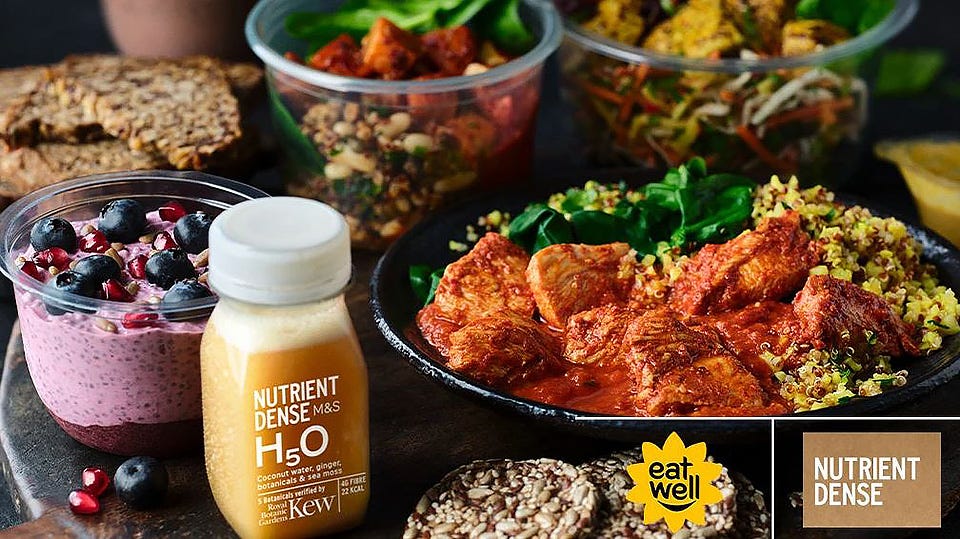
Marks & Spencer was first out of the gate with a ‘Nutrient Dense’ range designed for reduced appetites, with the proposition centred on nutrition per mouthful rather than simply fewer calories. Elsewhere, retailers including the Co-op and Morrisons have introduced or expanded similar meal options positioned around portion control and higher protein and fibre.
Ocado has also pointed to demand for smaller portions, including selling a 100g steak in response to customers looking for more controlled formats. It also added a ‘weight management’ online aisle and promptly got into hot water after experts pointed out similarities to a banned Holland & Barrett initiative from 2019.
That mis-step rather suggests a rush to get aboard the bandwagon and plant a flag in the space before bigger beasts like Tesco and Sainsbury’s unleash their offers. The January timing is also significant—for years, this month has been allocated for ‘Veganuary’ plant-based promos, but with that category now in severe decline it seems some players are seizing on GLP-1 as an alternative for tapping into post-Yuletide guilt-tripping.
Making merchandising moments count
The inference here is that this is a merchandising change as much as one centred on NPD. When a shopper is eating less, the traditional “serves two” mechanic loses relevance while larger packs stop looking like value. The growth opportunity shifts towards compact, premiumised meals, smaller fresh proteins, functional drinks and own-label lines that make nutrient density feel normal, not niche.
But this strategy carries a degree of risk. There’s a change that much of this merchandising starts to look performative. More sceptical shoppers may see this trend as simply rebadging ultra-processed products, while others may deem smaller package sizes combined with premium positioning as further evidence of shrinkflation.
Another significant finding from US research is that almost a third of GLP-1 users cut back on dining out. This behavioural change has potential to redirect spend back into grocery, but that doesn’t automatically mean more in the basket.
In practice, it manifests in altered consumption routines: more fresh food, fewer freezer fillers and fewer impulse grabs. This proposition is further reinforced by a very recent study by Danish scientists indicating GLP-1s may actually rewire users’ brains to favour ‘real food’ over processed alternatives. Purchasing habit changes are, this research emphasises, highly subtle but amount to sizeable differences when extrapolated across entire populations over time.
And even in booze, you lose
BWS is another category of concern for grocers because it encompasses both traffic and margin. Worldpanel by Numerator research found a 15pp reduction in alcohol volume purchases among households with GLP-1 users versus a benchmark.
Put that alongside Europe’s broader moderation trend and supermarkets may find themselves managing a long-term softening in big-ticket weekend alcohol shops, while trying to build relevance in no and low lines. The British Beer & Pub Association estimates a record 200 million pints of low and no-alcohol beer were consumed in 2025, which hints at more changes to supermarket shelves before too long.
The UK is not an outlier in rising usage of GLP-1s this side of the Atlantic. Numerous studies show growing enthusiasm across key European markets, so we can expect the assortment adjustments already manifesting in the US and UK to gradually become a feature of continental retail as well. This will likely show up first in private label development and I’m sure the major operators have already tasked their NPD teams to get working on this.
The overriding strategic takeaway isn’t that food demand collapses overnight due to GLP-1 uptake—it’s that demand fragments and retailers and brands are forced to diversify offerings accordingly. When new cohorts emerge who impose a higher bar for what counts as worth eating, it changes ranging, promotions and margin mix considerations. Executional excellence will be making “smaller but better” feel like a mainstream shop rather than a niche category, while keeping indulgence credible for everyone else.
This entails tighter portion architecture, clearer health cues that sidestep gimmickry and more experimentation in nutrient-dense ready meals, snacks and drinks. It also means accepting that, if biology is controlling persuasion, it’s time to plan for new routines rather than trying to sell the consumer back into old ones.
If you enjoyed this content, be sure to subscribe free to Retail Slop on Substack for regular updates and insights on developments across the retail world. You can also support our work via a paid subscription if you so choose, which would be super-nice!